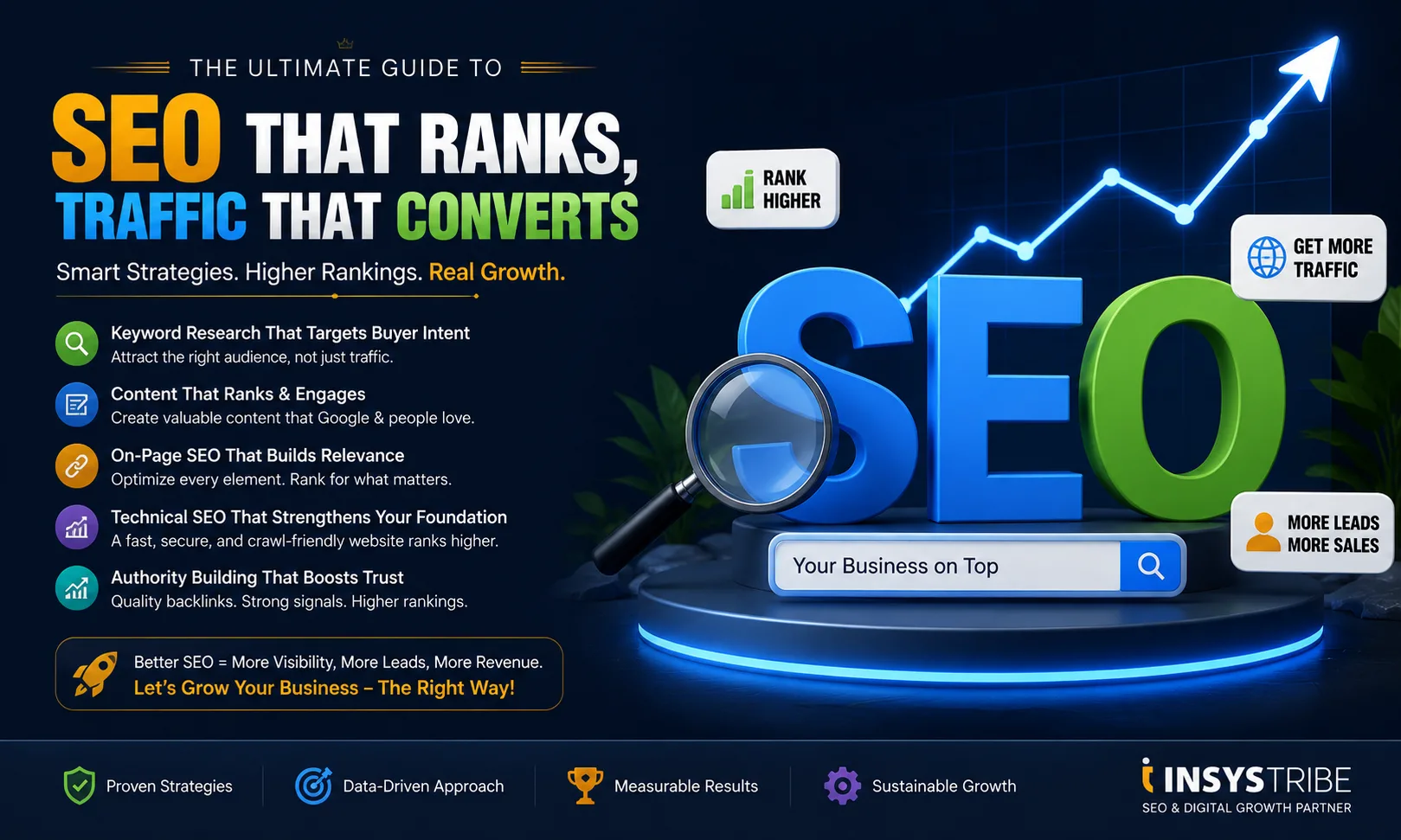
Why Some Websites Get Traffic While Others Get Customers
Many businesses invest in websites, content, and marketing campaigns expecting a flood of enquiries. Yet only a small percentage consistently generate qualified leads from organic search.
The difference isn't luck—it's strategy.
Modern SEO is no longer about stuffing keywords into pages or building random backlinks. Today's search engines reward websites that provide genuine value, strong user experiences, and authoritative content. Businesses that understand this shift are seeing long-term growth while competitors continue chasing short-term wins.
In this guide, we'll explore how modern SEO helps businesses attract the right audience, increase visibility, and turn traffic into revenue.
What Is SEO in 2026?
Search Engine Optimization (SEO) is the process of improving your website's visibility in search engines such as Google.
When potential customers search for products or services related to your business, SEO helps your website appear in front of them without paying for every click.
Unlike paid advertising, SEO compounds over time. A well-optimized page can generate traffic and leads for months or even years.
The modern SEO ecosystem includes:
Technical SEO
On-Page SEO
Content Marketing
Local SEO
Authority Building
User Experience Optimization
AI Search Visibility
Conversion Optimization
Businesses that combine these elements create a sustainable growth engine.
Why SEO Matters More Than Ever
Consumer behavior has changed dramatically.
Before making a purchase decision, people search online for:
Reviews
Comparisons
Solutions
Local providers
Industry experts
If your business isn't visible during this research stage, you're losing opportunities to competitors who are.
Some key benefits include:
Higher Quality Leads
SEO attracts users who are actively searching for solutions.
Unlike social media interruptions or cold outreach, organic search visitors already have intent.
Long-Term ROI
A successful SEO strategy continues producing results long after content is published.
Increased Brand Trust
Businesses appearing consistently in search results are often perceived as more credible and authoritative.
Better Conversion Rates
Organic visitors frequently convert better because they arrive with a specific purpose.
The Five Pillars of High-Performance SEO
1. Keyword Strategy
Successful SEO begins with understanding what your audience is searching for.
Instead of targeting broad terms, businesses should focus on:
Buyer-intent keywords
Service-specific searches
Industry-specific terms
Location-based opportunities
A strategic keyword map helps create content that aligns with customer intent.
2. Technical SEO
Even great content struggles if search engines can't crawl and understand your website.
Technical SEO focuses on:
Site speed
Mobile responsiveness
Core Web Vitals
Schema markup
Crawlability
XML sitemaps
Indexation management
A technically sound website creates a strong foundation for rankings.
3. Content That Solves Problems
Search engines prioritize content that provides useful answers.
Effective content should:
Address customer questions
Demonstrate expertise
Offer practical solutions
Build topical authority
Businesses that publish valuable content consistently establish themselves as trusted resources in their industry.
4. Authority Building
Google views backlinks as signals of trust.
Quality matters more than quantity.
Strong authority comes from:
Industry publications
Relevant mentions
Digital PR
Strategic partnerships
High-value content
The goal is earning links naturally through expertise and credibility.
5. Conversion Optimization
Traffic alone doesn't grow a business.
Visitors must take action.
Conversion optimization includes:
Clear CTAs
Lead generation forms
Trust signals
Testimonials
Case studies
Faster page speed
Improved user journeys
The best SEO strategies focus on revenue, not rankings alone.
SEO vs Paid Advertising
Both channels have value, but they serve different purposes.
Paid Advertising
Pros:
Immediate visibility
Fast testing
Predictable scaling
Cons:
Traffic stops when spending stops
Rising costs
Competitive bidding
SEO
Pros:
Long-term growth
Lower acquisition costs over time
Stronger brand authority
Cons:
Requires consistency
Takes time to mature
The strongest growth strategies often combine both channels.
Common SEO Mistakes Businesses Make
Many companies unknowingly limit their growth by:
Targeting the wrong keywords
Ignoring technical SEO
Publishing low-quality content
Neglecting mobile optimization
Focusing only on rankings
Not tracking conversions
Building poor-quality backlinks
Avoiding these mistakes can significantly improve performance.
The Future of SEO
Search is evolving rapidly with AI-generated results and conversational search experiences.
To remain competitive, businesses should focus on:
Expertise-driven content
Strong brand authority
User-first experiences
Structured data
Helpful resources
Fast websites
The businesses that adapt early will capture more visibility and trust.
Final Thoughts
SEO remains one of the most powerful digital growth channels available today.
When executed correctly, it creates a sustainable system that attracts qualified visitors, builds authority, and generates leads long after the initial investment.
Whether you're a local business, ecommerce store, SaaS company, or enterprise brand, SEO can become your most valuable long-term marketing asset.
Ready to Grow Organically?
At Insystribe, we help businesses build scalable SEO systems designed for visibility, authority, and measurable growth.
Get a Free SEO Audit today and discover what's holding your website back from reaching its full potential.