Content strategy is more than publishing blogs
Many businesses treat SEO content as a calendar of random blog posts. They publish articles because keywords have search volume, but the content does not connect to services, landing pages, or enquiries. A stronger SEO content strategy starts with business goals. Which services matter most, which buyers are valuable, what questions do they ask, and what content helps them move toward a decision?
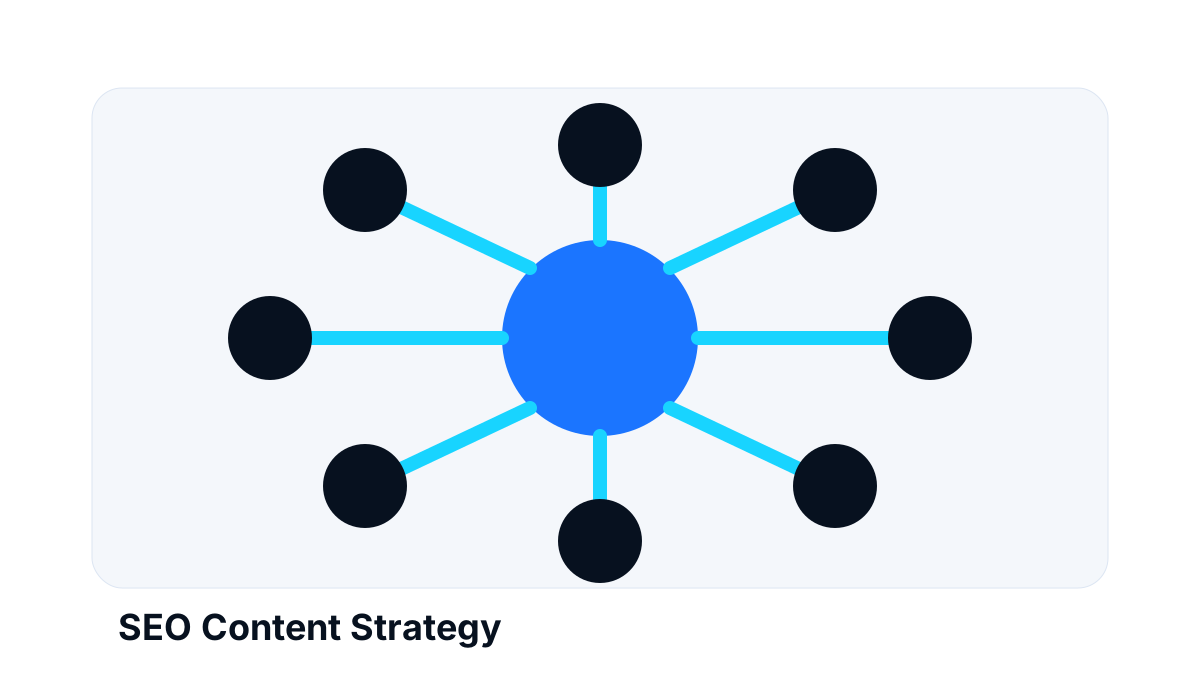
Topic clusters solve this problem by connecting related content around a core theme. A cluster may include a main service page, supporting blog posts, FAQs, comparison pages, case-study style proof, location pages, and internal links. Each page has its own purpose, but together they build topical authority and guide users through research.
Map search intent before writing
Search intent is the reason behind a query. Some users want information, some compare providers, some look for pricing, some need local options, and some are ready to contact a company. Before writing, group keywords by intent rather than by volume alone. For example, SEO services, technical SEO audit, ecommerce SEO checklist, local SEO company, and SEO pricing all belong to different stages of the journey.
A service page should target commercial intent. A guide can answer informational questions. A comparison page can help users evaluate options. A FAQ section can remove hesitation. If every article is informational and none connect to commercial pages, the website may get traffic without leads.
Create pillar pages and supporting assets
A pillar page is usually a broad, important page that explains a service or topic in depth. Supporting assets answer narrower questions. For a website development company, the pillar may be website development services, while supporting pages include ecommerce website development, healthcare website development, website speed optimization, WordPress development, and website redesign SEO checklist.
Each supporting page should link back to the pillar where useful. The pillar should link to supporting pages naturally. This creates a clear structure for users and search engines. The goal is not to force links. The goal is to make the website easier to explore.
Write for useful depth
Useful content is specific, original, and practical. It should show that the business understands the problem. Avoid generic paragraphs that could appear on any website. Add examples, process details, decision criteria, mistakes to avoid, FAQs, and next steps. If a page targets healthcare SEO, talk about treatment pages, doctor profiles, appointment searches, patient trust, and local clinic visibility. If it targets SaaS SEO, talk about feature pages, comparison keywords, demo flows, and integration content.
Good SEO writing balances clarity with depth. The page should be easy to scan but substantial enough to answer the query. Use headings, short paragraphs, bullet lists, internal links, and CTAs. Every content asset should have a next step, whether that is reading a related guide, exploring a service page, or requesting a consultation.
Refresh and connect old content
Content strategy is not only about new publishing. Existing pages often need updates. Review older blog posts, thin pages, outdated service copy, and pages with impressions but low clicks. Improve titles, rewrite weak intros, add missing FAQs, include internal links, update examples, and connect the content to relevant service pages.
Search Console is helpful for finding queries that a page almost ranks for. If a blog post gets impressions for a valuable term, improve the content and internal links. If two pages compete for the same query, consolidate or clarify their purposes. Content pruning can be as important as content creation.
Measure content by business value
Traffic is useful, but it is not the final goal. Measure organic enquiries, assisted conversions, rankings for commercial pages, engagement on service pages, internal link clicks, and form submissions by page source. A blog post that brings fewer visits but sends qualified users to a service page may be more valuable than a high-traffic article with no business connection.
An effective SEO content strategy creates a connected system. It helps search engines understand your expertise, helps users answer real questions, and helps the business turn visibility into enquiries. When every content asset has a role, the website becomes easier to rank, easier to navigate, and easier to grow.
Build clusters around revenue pages
The easiest way to keep content aligned with business goals is to start with revenue pages. List the services, industries, locations, or products that matter most. Then identify the questions buyers ask before they choose one of those services. Those questions become supporting content ideas. A CRM development company page may be supported by articles about CRM features, lead tracking, sales dashboards, workflow automation, CRM integrations, and choosing custom CRM versus ready-made tools.
Each supporting article should have a clear link path back to the commercial page. This does not mean every paragraph should sell. It means readers should have a natural next step when they are ready. Internal links, related cards, CTA sections, and contextual examples can all guide users without making the content feel pushy.
Content quality needs maintenance
Search results change, competitors improve, and customer questions evolve. A content cluster that worked last year may need new examples, updated statistics, stronger FAQs, or better internal links. Schedule content reviews every few months for important pages. Look for declining clicks, outdated information, thin sections, cannibalization, and missing conversion paths.
Content strategy becomes powerful when it is treated as an operating system, not a one-time campaign. Every new page should strengthen the cluster. Every update should make the website clearer. Every internal link should help the visitor move toward a useful answer or a meaningful action.
Use briefs before writing
Content briefs keep writers, SEO teams, and business owners aligned. A useful brief should include the target audience, search intent, primary questions, related service page, internal links, examples, required proof, and CTA. This prevents generic writing and helps each article support the wider cluster. The brief should not force awkward keyword repetition. It should guide the writer toward a better answer than competitors provide.
After publishing, add the page to the right internal link paths. A new article should be linked from relevant service pages, older blog posts, and related resources. Without internal links, even strong content can sit isolated and underperform.