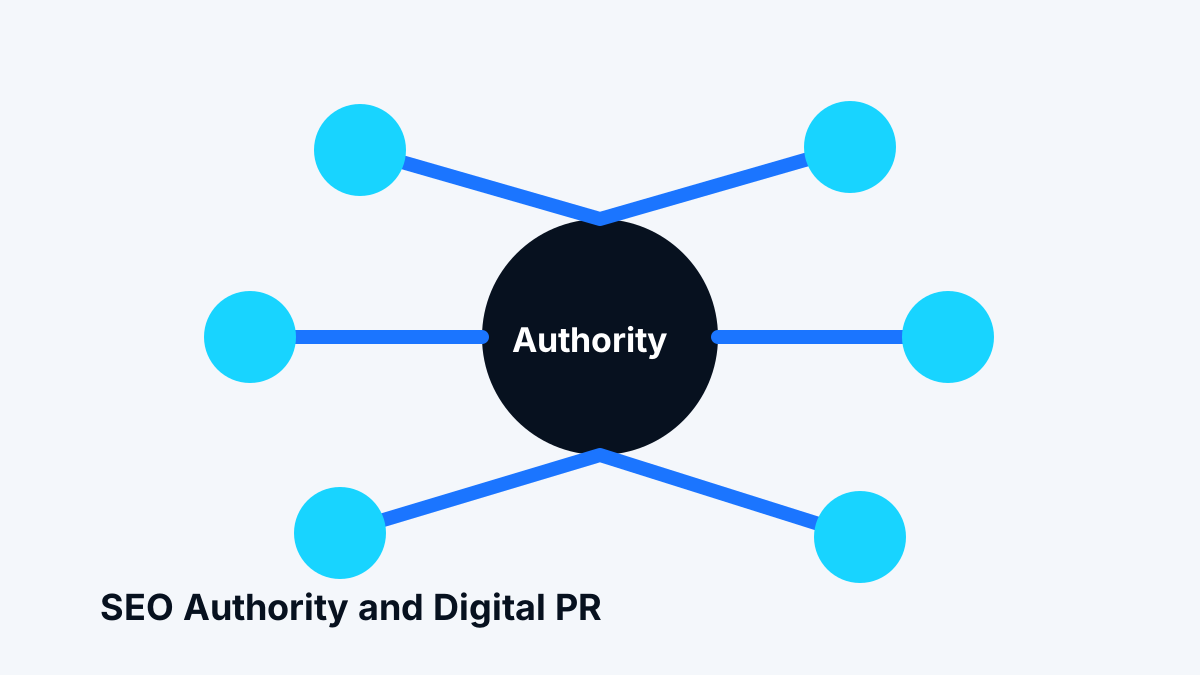
Authority is earned, not manufactured
Search engines use many signals to evaluate trust, and backlinks remain one of the most discussed. But link building has changed. Low-quality directories, comment spam, private blog networks, paid link schemes, and irrelevant guest posts can create risk instead of growth. Modern authority building should focus on earning attention from relevant websites, publications, partners, communities, and industry resources.
Authority is not only about the number of links. Relevance, quality, placement, brand credibility, content usefulness, and natural context all matter. A single link from a trusted industry publication can be more valuable than dozens of weak links from unrelated sites.
Start with link-worthy assets
Outreach is easier when the website has something worth referencing. Link-worthy assets can include original research, industry guides, checklists, calculators, case studies, templates, statistics pages, expert commentary, comparison resources, and useful tools. For a service company, a detailed local SEO checklist, website migration guide, or industry benchmark report can attract links because it helps readers solve a real problem.
The best assets are specific. A generic blog post about why SEO matters is unlikely to earn links. A practical guide about ecommerce category SEO, healthcare appointment page UX, or SaaS comparison keywords has a clearer audience and stronger reason to be cited.
Use digital PR for visibility
Digital PR connects your expertise with journalists, bloggers, industry websites, newsletters, and communities. This may include expert quotes, data-led stories, commentary on trends, useful statistics, and outreach around original resources. The goal is to earn coverage that introduces the brand to relevant audiences while also supporting organic authority.
Good digital PR is not mass email. It requires understanding the publication, the audience, and the reason your contribution is useful. Personalization matters. A short, relevant pitch with a strong asset usually performs better than a long generic message sent to hundreds of contacts.
Build relationships, not only links
Authority grows faster when a business builds real relationships. Partners, suppliers, customers, associations, event organizers, podcasts, directories with editorial standards, and niche publications can all create legitimate mention opportunities. These links often make sense because there is a real connection.
For example, a web development company may earn mentions through client launches, partner pages, interviews, local business features, technology articles, and industry guides. A healthcare company may earn links from associations, resource pages, event pages, and educational content. Relevance should guide the strategy.
Avoid risky shortcuts
Cheap link packages are tempting, but they can damage long-term SEO. Warning signs include guaranteed domain authority numbers, unrelated websites, identical anchor text, suspicious guest post networks, hidden placements, and sites that publish anything for a fee. Search engines are better at detecting manipulative patterns, and poor links rarely build real business trust.
Anchor text should also look natural. If every backlink uses the exact same commercial keyword, the pattern can appear artificial. A healthy profile includes branded anchors, URL anchors, natural phrases, and some descriptive context. Focus on relevance and usefulness first.
Support links with strong internal pages
Backlinks work best when they point to pages worth ranking. If a link points to a weak page with thin content, poor UX, or no conversion path, the opportunity is wasted. Make sure important pages have strong headings, useful sections, internal links, schema, fast loading, and clear CTAs. Authority should flow into a website that is ready to use it.
Internal linking then helps distribute authority. A link-worthy blog post can support related service pages through contextual links. A research asset can link to industry landing pages. A case study can link to services and contact forms. Authority building should connect to the full SEO architecture.
Measure authority by outcomes
Track new referring domains, link quality, brand mentions, referral traffic, rankings for supported pages, organic enquiries, and assisted conversions. Do not celebrate links that have no relevance, no traffic, and no connection to business goals. Quality authority building takes time, but it creates stronger signals than shortcuts.
The best SEO authority strategy combines useful content, technical quality, industry relevance, digital PR, and relationship-led outreach. When done well, links are not isolated tactics. They are proof that the website deserves attention.
Choose outreach targets carefully
Good outreach begins with a relevant target list. Look for websites that publish content your audience actually reads. Industry blogs, local publications, business associations, podcasts, resource pages, event websites, technology partners, and niche newsletters can all be useful. Check whether the site has real authors, editorial standards, organic visibility, audience relevance, and sensible outbound links. Avoid websites that look created only to sell guest posts.
The pitch should be built around the recipient, not around your need for a backlink. Explain why the resource is useful for their readers, what problem it solves, and why it is credible. If you are offering expert commentary, keep it concise and specific. If you are promoting a guide or data asset, highlight the most interesting insight.
Authority grows with brand consistency
Digital PR works better when the brand has consistent messaging across the website, social profiles, directories, and content assets. When journalists or partners check the company, they should find a professional website, clear service pages, useful resources, contact details, and proof. A weak website can reduce outreach success because people hesitate to reference brands that do not look credible.
Authority building is a long game. It compounds when useful content, technical SEO, relationship building, and brand positioning work together. The goal is not to chase every possible link. The goal is to earn the right mentions from the right places and direct that authority into pages that can create real business outcomes.
Internal expertise can become linkable content
Most companies already have knowledge that can become strong authority assets. Sales teams know common objections, support teams know recurring customer problems, and leadership understands market trends. Turn that knowledge into guides, data summaries, opinion pieces, checklists, and resources that others can reference. This approach is more durable than chasing random link placements.
Before launching an outreach campaign, improve the page that will receive attention. Add clear headings, supporting visuals, author or organization credibility, related internal links, and a simple CTA. If people visit from a publication or partner website, they should immediately understand why the brand is trustworthy.